Smell-related causes
Colds, sinus problems, allergies, nasal polyps, and post-viral smell loss can reduce flavour because smell is a major part of how food is experienced.
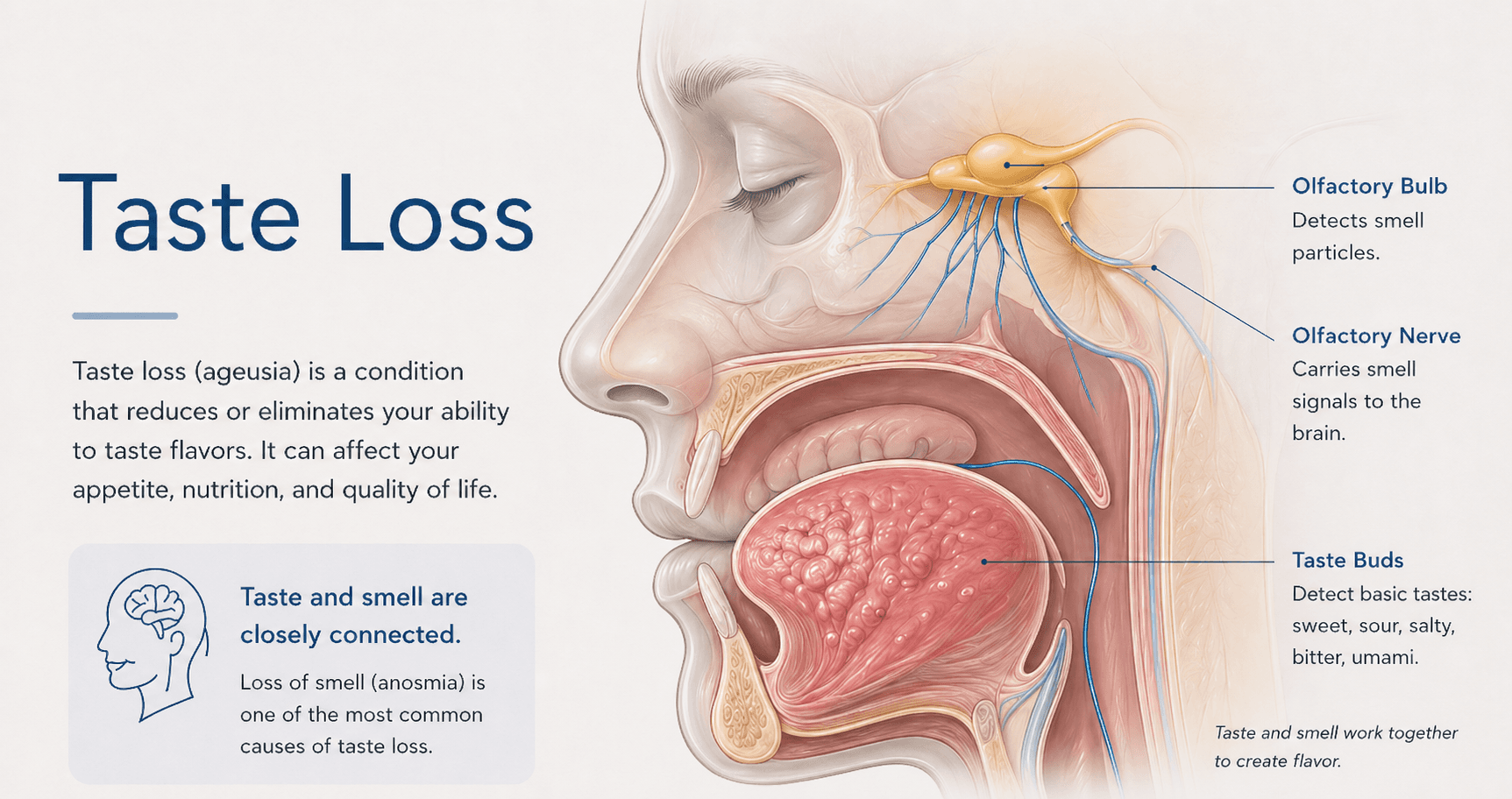
Understanding taste loss
Taste loss can be confusing, frustrating, and sometimes frightening. This page explains why taste can change or disappear, how smell is often involved, and what may still be possible to detect and enjoy.
Possible causes
Taste loss can be temporary, permanent, or somewhere in between. Sometimes the taste system is affected directly. Often, smell is reduced and flavour fades with it.
Colds, sinus problems, allergies, nasal polyps, and post-viral smell loss can reduce flavour because smell is a major part of how food is experienced.
Neurological, autoimmune, metabolic, infectious, and salivary conditions can affect taste, smell, or both.
Head injury, surgery, nerve damage, stroke, and some brain-related conditions may disrupt taste pathways.
Chemotherapy, radiotherapy, toxin exposure, and nutritional deficiencies can change how taste is detected or interpreted.
What may remain
Even when taste or smell is reduced, people may still detect useful food signals. These can become the foundation for making food feel more enjoyable again.
Basic tastes
Sweet, salty, sour, bitter, and umami may still be partly or fully detectable.
Sensation
Chilli heat, pepper warmth, mustard and wasabi sharpness, mint cooling, and tingling can often still be felt.
Texture & temperature
Crunch, creaminess, crispness, warmth, coldness, and contrast can help food feel satisfying.
Future recipe matching
This page will soon connect to a filterable Tasteless Cooking tool that suggests ingredients and recipes based on cause, detectable tastes, sensation, texture, temperature, and food preferences.
Medical resources
We prioritise information from established medical and scientific organisations, including peer-reviewed research and clinically validated studies.
This helps ensure the guidance we share is grounded in evidence and reflects current medical understanding of taste and smell loss.